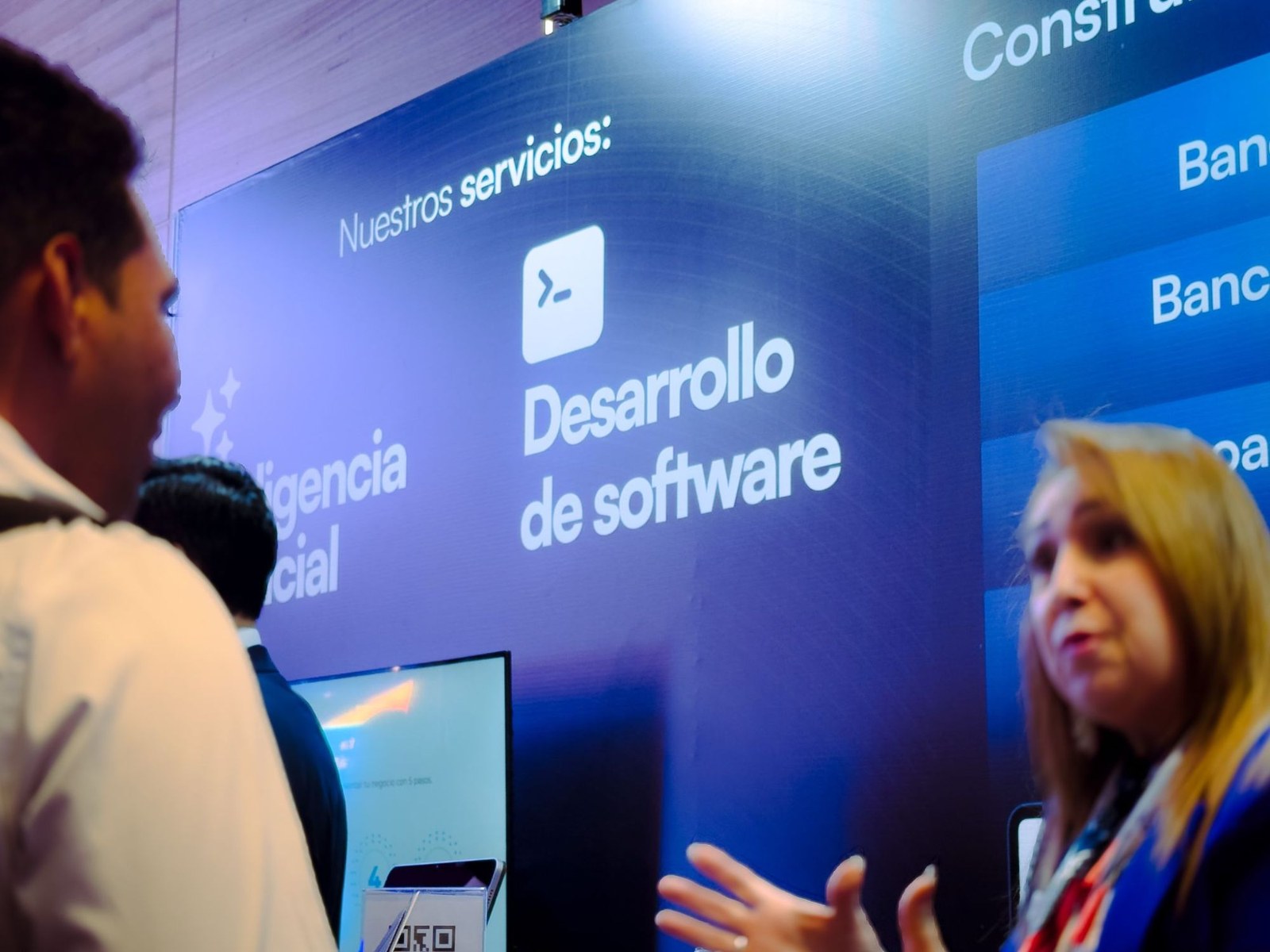
On July 28 we participated in Tech Day El Salvador, and what we experienced that day confirms something we had already been seeing in our client conversations: companies in the region are not waiting for artificial intelligence to come to them. They are actively looking for ways to integrate it into what they already have.
Our team was there with a full booth, and the conversations we had throughout the day were direct, concrete, and in many cases revealing. People were not arriving to ask what AI is. They were arriving with specific problems they wanted to solve with it.
The use cases that kept coming up
Most conversations at our booth did not start with “we want to implement AI.” They started with a specific operational problem:
- Customer orders through chat with no clear process: sales teams receiving orders via WhatsApp and managing them manually, with errors and response times that depended on who was available.
- Abandoned customer follow-up: prospects who had shown interest, then received a generic email with no personalization, and no one monitored whether they responded.
- Repetitive service consuming team time: frequent questions, order confirmations, status updates, all managed manually by people who could be doing higher-value work.
Those three scenarios share the same underlying solution: automated flows with AI connected to the channels customers already use. WhatsApp, email, website chat. AI enters the channel where the conversation is already happening, processes the request, generates the response, handles the follow-up automatically, and escalates to a human only when necessary.
That is what we showed. And the reaction was consistent: “how long does something like this take to implement?”
The marketing agency case
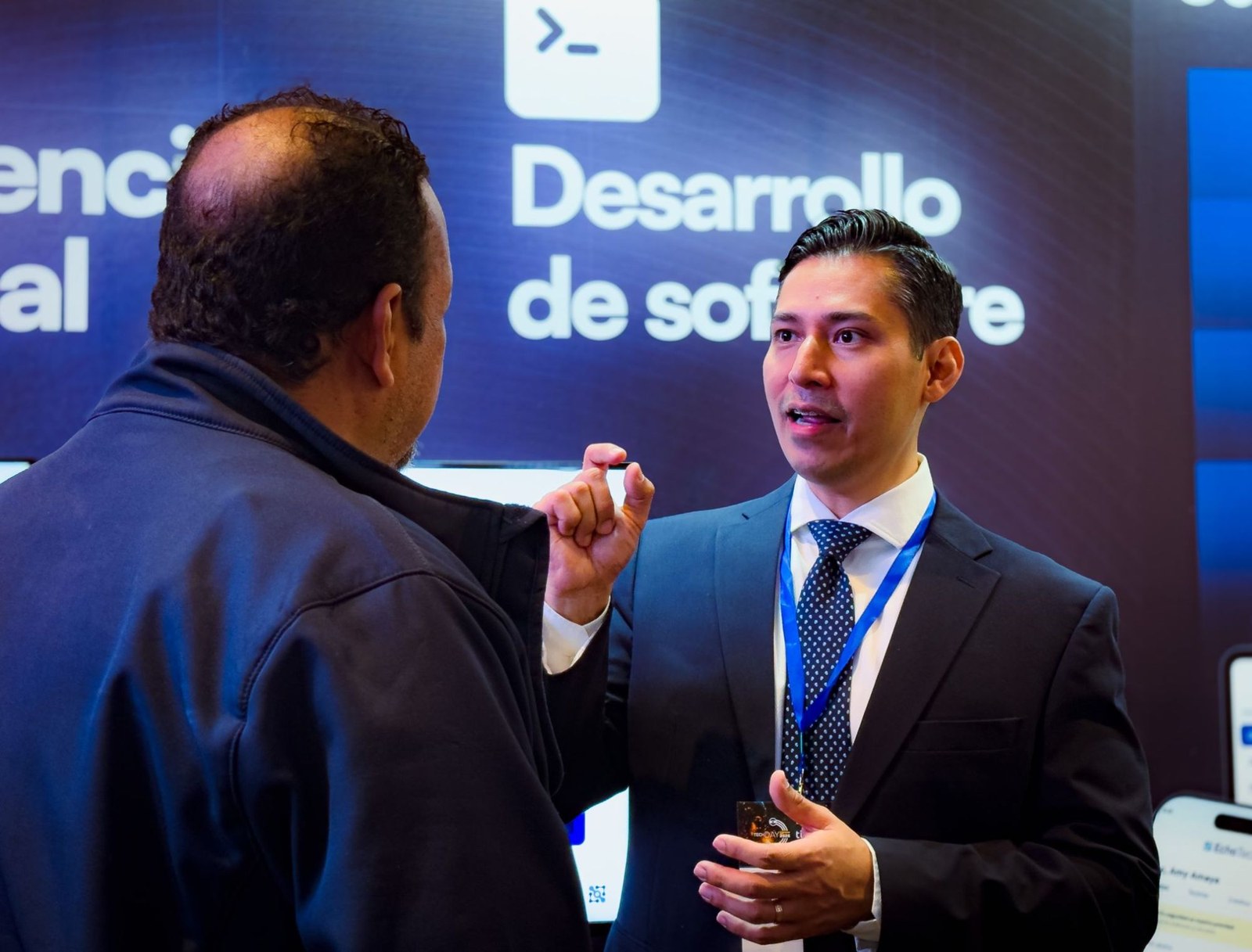
One conversation that stood out was with the manager of a marketing agency who arrived with a broader question: how to automate all their internal processes with AI.
It was not a technical question. It was a business question. Their team was spending time coordinating clients and creatives through email chains, campaign follow-up depended on someone remembering to do it, and new client onboarding was a slow and manual process.
The starting point in those cases is not the technology. It is mapping which workflows have the most friction, which generate the most errors, and which consume time that should go toward higher-value work. AI comes after, connecting the dots. That is the kind of conversation we are most interested in having.
The fear that no one wants to name out loud
There were also more uncomfortable conversations. Several people honestly raised the same underlying question: if we automate this, what happens to the people doing that work today?
It is a legitimate concern and it does not have a simple answer. What we can say, from our experience working with companies across different sectors, is that well-implemented automation does not eliminate teams. It redirects work. People who previously processed manual orders or sent follow-up emails one by one can focus on tasks that generate more value: complex service, strategic decisions, key client relationships.
The generational shift that comes with AI adoption is real and has friction. The organizations achieving results are the ones that accompany that change with training, clarity about new roles, and leadership that communicates the why. That is also part of what we do at Echo Technologies.
What we introduced at Tech Day
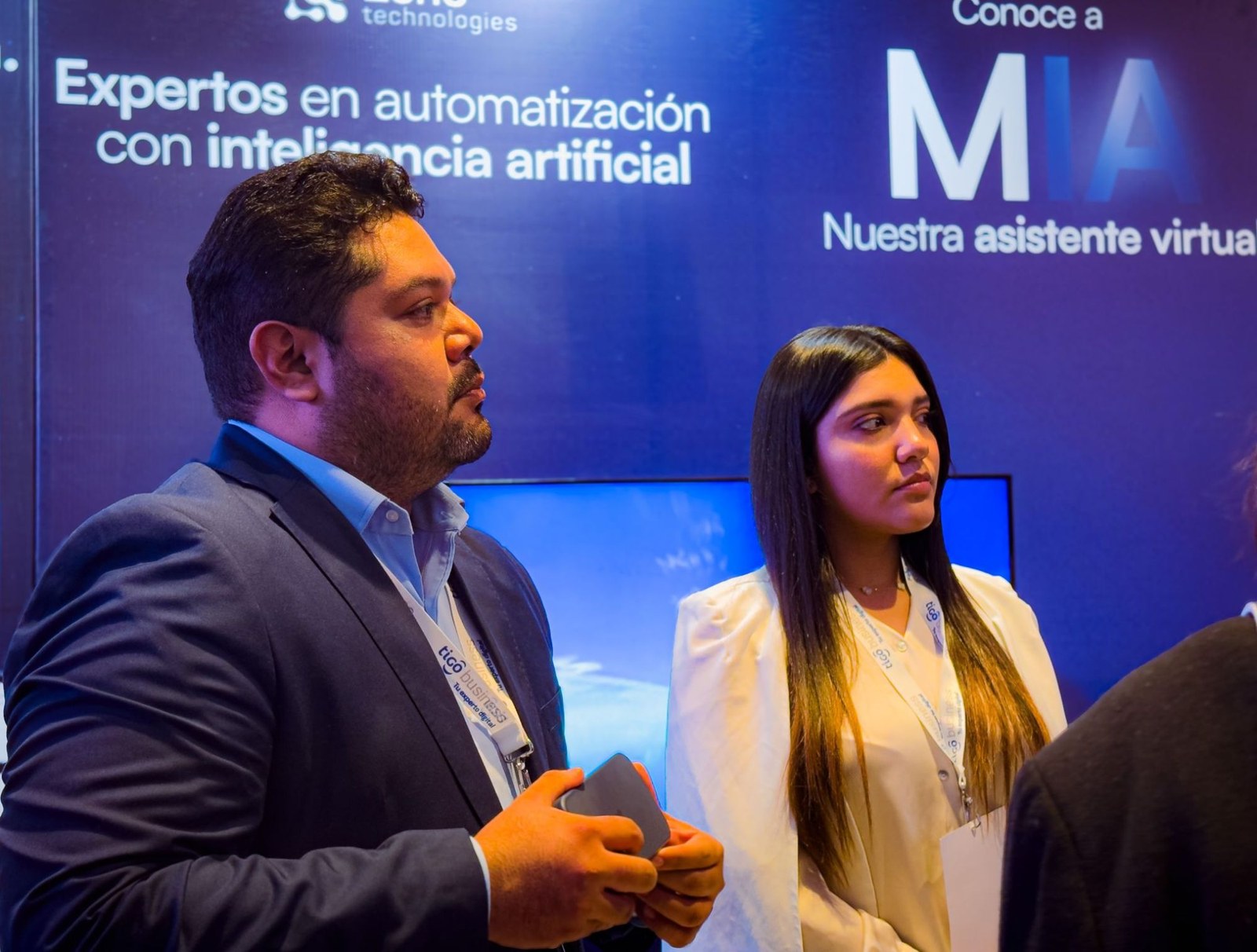
Beyond the automation conversations, Tech Day was the space where we introduced two lines of work Echo Technologies is developing for the financial and business sectors.
MIA, our AI virtual assistant
MIA is the virtual assistant we built to integrate into companies’ internal processes. It is not a generic chatbot: it is configured with each organization’s vocabulary, workflows, and business rules, and can connect with the systems they already have running.
The most frequent questions at the booth were direct: “Does it connect with our current system?” and “Can it handle WhatsApp and email at the same time?” The answer to both is yes.
Digital banking products
We also introduced the products Echo Technologies is launching for financial institutions:
- Online banking: a digital platform for financial institutions to offer complete services from the browser, with direct integration to their core systems.
- Mobile banking: a native iOS and Android application designed for the Central American user, connected to the banking core.
- Digital customer onboarding: a complete flow for enrolling new customers into financial products without paper, with identity verification and digital signature.
- Digital financial experience platforms: tailored solutions to improve every touchpoint between the institution and its customers across digital channels.
The response at the event was clear: there is a real need in the region’s banking and financial sector to modernize the customer experience without replacing all the infrastructure they already have running. That is exactly what these products address.
What we are taking away from Tech Day
Tech Day El Salvador confirmed something worth saying out loud: companies in the region are not behind. They are making decisions, testing solutions, and looking for partners who understand their context, not ones who sell them something generic.
If your company is at that point, whether with questions about WhatsApp automation, modernizing your digital banking customer experience, or starting a real AI-driven transformation process, we are ready for that conversation.